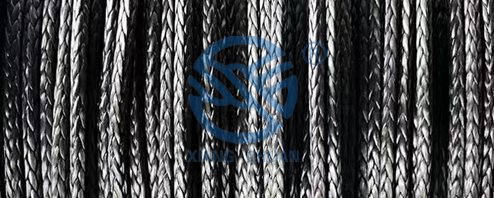
Mooring Tails, as critical components in marine mooring systems, play a vital role in absorbing shocks, distributing loads, and protecting marine structures and vessels from excessive tension. Their tensile strength directly determines the safety and reliability of the entire mooring system, especially in harsh marine environments such as strong winds, waves, and currents. Testing the tensile strength of mooring tails is not only a mandatory requirement for quality control in production but also a key measure for regular maintenance and safety assessment during service. This article details the testing methods, procedures, influencing factors, and quality control points of mooring tails’ tensile strength, providing a comprehensive guide for standardized testing.
1. Preparations for Tensile Strength Testing
Adequate preparation is the premise of accurate and reliable tensile strength testing, covering sample selection, equipment calibration, and environmental control. Firstly, sample selection must comply with relevant international standards such as ISO 14507 and ASTM D6954, which specify the size, quantity, and sampling location of mooring tail samples. Typically, 3-5 samples should be taken from the same batch of mooring tails, avoiding areas with visible damage, wear, or joint defects. The length of each sample should be at least 500mm to ensure that the clamping part and the effective test section are clearly separated, preventing the sample from breaking at the clamp during testing.
Secondly, equipment calibration is essential to ensure test accuracy. The core equipment for tensile strength testing is a universal testing machine with a load capacity matching the mooring tails’ rated tensile strength—usually 1.5 to 2 times the expected maximum load. Before testing, the testing machine must be calibrated by a qualified institution, including load sensor accuracy, displacement measurement error, and clamping device stability. Additionally, appropriate clamping tools should be selected according to the material of the mooring tails (such as synthetic fiber, steel wire, or composite material). For synthetic fiber mooring tails, soft jaws with rubber linings are recommended to avoid damaging the sample and causing premature fracture; for steel wire mooring tails, hard alloy jaws with anti-slip grooves are suitable to ensure firm clamping.
Finally, environmental control cannot be ignored. The test environment should be maintained at a temperature of 23±2℃ and a relative humidity of 50±5% as specified in the standards, because extreme temperature and humidity will affect the mechanical properties of mooring tail materials. For example, high temperature may soften synthetic fibers, reducing their tensile strength, while low temperature may make them brittle. Samples should be placed in the test environment for at least 24 hours before testing to achieve environmental equilibrium.
2. Core Testing Methods and Procedures
The tensile strength testing of mooring tails mainly adopts the static tensile method, which applies a uniform and gradual load to the sample until it breaks, recording the load-displacement curve and key data. The specific procedures are as follows:
First, sample installation. Fix both ends of the mooring tail sample to the upper and lower clamps of the universal testing machine, ensuring that the sample is in a straight state without torsion or bending. The clamping force should be adjusted appropriately—too loose will cause the sample to slip during testing, resulting in inaccurate data, while too tight will damage the sample and affect the test results. For mooring tails with joints, the joint should be located in the middle of the effective test section to ensure that the joint is subjected to uniform tension.
Second, parameter setting. Input test parameters into the testing machine control system, including loading rate, sample size, and test mode. The loading rate is a key parameter that directly affects the test results; according to ISO 14507, the loading rate for synthetic fiber mooring tails should be 100±10mm/min, while for steel wire mooring tails, it can be adjusted to 50±5mm/min. The testing machine should be set to record real-time data such as load, displacement, and stress-strain during the test, and automatically generate a load-displacement curve.
Third, formal testing. Start the testing machine to apply load to the sample at a constant rate. During the test, observe the sample’s deformation and damage status in real time, and record any abnormal phenomena such as slipping, local damage, or sudden fracture. Continue loading until the sample is completely broken, then stop the testing machine and save all test data. For samples that do not break at the effective test section (such as breaking at the clamp), the test result is invalid, and a new sample should be tested.
Fourth, data calculation and analysis. Based on the recorded test data, calculate the key indicators of tensile strength, including ultimate tensile strength, yield strength (for elastic materials), and elongation at break. Ultimate tensile strength is calculated by dividing the maximum load borne by the sample by its cross-sectional area; elongation at break is the percentage of the sample’s elongation at break relative to its original length. The load-displacement curve can reflect the entire process of the sample from deformation to fracture, helping to analyze the material’s toughness and damage mechanism.
3. Key Influencing Factors and Error Control
During the tensile strength testing of mooring tails, various factors may affect the accuracy of test results, and corresponding control measures should be taken to reduce errors.
Sample quality is the primary influencing factor. Defects such as internal cracks, uneven thickness, and joint loosening in the sample will lead to premature fracture and low test results. Therefore, strict visual inspection and preliminary screening must be carried out before sampling, and samples with any defects should be discarded. In addition, the cross-sectional area of the sample must be accurately measured—for synthetic fiber mooring tails, the average diameter of multiple points should be measured with a micrometer, and the cross-sectional area should be calculated using the circular area formula; for irregular cross-section samples, a laser area meter can be used for measurement.
Clamping method and load rate also have a significant impact on test results. Improper clamping may cause stress concentration at the clamp, leading to early fracture of the sample. To avoid this, the clamping surface should be clean and smooth, and the sample should be aligned with the center line of the clamp. The load rate is too fast, which will increase the measured tensile strength; too slow will reduce it. Therefore, the load rate must be strictly in accordance with the standard requirements, and the same rate should be used for the same batch of samples.
Environmental factors such as temperature and humidity cannot be ignored. As mentioned earlier, extreme environmental conditions will change the mechanical properties of mooring tail materials. In addition, external vibrations and air flow during the test may affect the stability of the testing machine, so the test should be carried out in a stable environment, and the testing machine should be installed on a shock-absorbing foundation.
4. Special Considerations for Different Material Mooring Tails
Mooring tails are made of various materials, and their tensile strength testing methods need to be adjusted according to material characteristics to ensure test accuracy.
For synthetic fiber mooring tails (such as polyester, polyamide, and polypropylene), their water absorption and creep properties should be considered. If the mooring tails have been used in a marine environment, they should be dried to the standard moisture content before testing, otherwise, the water absorption will reduce the tensile strength. In addition, synthetic fibers have obvious creep characteristics, so the load should be applied stably during testing, and the holding time should be controlled to avoid creep deformation affecting the test results.
For steel wire mooring tails, corrosion resistance is a key factor. Rust and corrosion on the surface of steel wires will reduce their tensile strength and toughness. Therefore, the surface of the sample should be cleaned before testing, and rust should be removed with sandpaper without damaging the base material. During testing, attention should be paid to whether the steel wire has fatigue cracks, which may cause sudden fracture and affect the test safety.
For composite material mooring tails, the bonding performance between layers should be considered. The tensile strength of composite materials is not only related to the base material but also to the bonding strength between layers. During testing, if delamination occurs between layers, the test result should be recorded separately, and the bonding quality of the composite material should be evaluated.
5. Test Result Evaluation and Application
The evaluation of mooring tails’ tensile strength test results should be based on relevant international standards and product technical specifications. The average value of multiple valid samples is taken as the final tensile strength of the batch of mooring tails. If the test result is higher than or equal to the rated tensile strength specified in the product standard, the batch is qualified; if it is lower than the rated value, the batch is unqualified, and it is prohibited to use it in engineering.
Test results are not only used for product quality control but also provide important data support for the maintenance and replacement of mooring tails in service. For mooring tails used for a certain period, regular tensile strength testing can evaluate their aging degree and residual service life. If the tensile strength is reduced to 80% of the rated value, the mooring tails should be replaced in time to avoid safety accidents.
In conclusion, testing the tensile strength of mooring tails is a systematic work that requires strict compliance with standard requirements in sample preparation, equipment calibration, testing procedures, and data analysis. By mastering scientific testing methods and controlling key influencing factors, accurate and reliable test results can be obtained, which is of great significance for ensuring the safety and stability of marine mooring systems. With the continuous development of mooring technology, the tensile strength testing methods will be more intelligent and precise, providing stronger support for the development of the marine industry.

 Español
 Portugues
 Pусский
 Français
 Deutsch
 日本語
日本語
 한국어
한국어
 العربية
 Italian
 Nederlands
 Ελληνικά
 Svenska
 Polski
 ไทย
ไทย
 Turkish
 हिन्दी
 Indonesia
 Melayu
 Tiếng Việt
 dansk
dansk
 Magyar
 বাংলা
বাংলা
 čeština
 Soomaali
 မြန်မာ
 فارسی
فارسی
 українська
 norsk
norsk
 Gaeilge
 беларускі
 Română
 ພາສາລາວ
 Filipino
 lietuvių
 Cymraeg
 Suomalainen
 o'zbek
 اردو
اردو
 հայերեն
 سنڌي
سنڌي
 Hrvatski
 íslenskur
 galego
 català
 Zulu South Africa
 ಕನ್ನಡ
ಕನ್ನಡ
 Indonésia Sunda
 Кыргызча
 тоҷикӣ
 Србија
 Hawaii
 नेपाल
नेपाल
 euskara
 latvija
 پښتو
پښتو
 საქართველოს
 bosna
bosna
 Eesti
Eesti
 Azerbaijani
 Shqipëria
 Malta
Malta
 Kikongo
 Eʋegbe
 Fiji
Fiji
 Tonga
Tonga
 中文站
中文站

 +86-514-88253368



 Phone
Phone
Comment
(0)