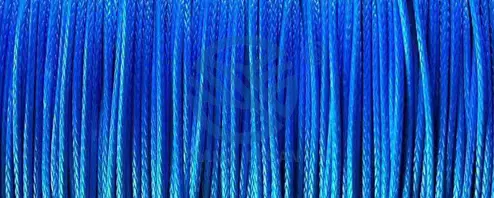
The performance of any high-strength synthetic line depends not only on the fiber it is made from, but also on the way that fiber is arranged. For marine and industrial operators, the physical construction of a rope—whether it is a double braided structure, a multi-strand plait, or a composite combination of core and jacket—directly determines how the product handles on deck, how it distributes load, how it resists abrasion and kinking, and how long it will serve in demanding applications. This article examines how construction geometry shapes the behavior of Mooring Rope, Towing Rope, and Winch Rope, and offers guidance for selecting the right design for specific duties.
The Fundamentals of Rope Construction
Rope construction refers to the geometric arrangement of yarns, strands, and braids that form the finished line. Traditional laid constructions, such as three-strand and eight-strand designs, remain widely used for general marine work because they are simple, economical, and easy to splice. However, as operating requirements have grown more demanding, braided constructions have become increasingly important. A Braided Rope distributes load more evenly across its cross-section, offers a smooth and compact surface, and is substantially more resistant to kinking and hockling than its laid counterparts.
Two broad families of braided construction dominate modern high-performance line handling: single-braid and double-braid designs. In a single-braid rope, yarns are interwoven into a single tubular braid. This structure offers excellent flexibility and a smooth surface, but it carries the full load in one layer. In contrast, a Double Braided Rope consists of a braided inner core surrounded by a second braided outer jacket, allowing the core and cover to share the load while the jacket protects the load-bearing core from wear and environmental exposure.
Double Braided Mooring Rope: Core-and-Cover Engineering
Double braided mooring rope has become a benchmark for berthing and station-keeping applications. In this design, the inner core provides the rope's principal strength and load-bearing capacity, while the outer braid shields the core from routine handling contact, mooring equipment surfaces, and abrasive deck conditions. This core-and-cover arrangement reduces outer cover slack, minimizes slippage between layers, and produces a torque-free, balanced rope that handles predictably during repeated mooring cycles.
The choice of materials within the double braided structure is equally important. A mooring rope built with an ultra-high molecular weight polyethylene (UHMWPE) core and a polyester jacket, for example, combines very high tensile strength with very low stretch, while the polyester cover provides dimensional stability and resistance to ultraviolet exposure and seawater. Alternatively, a double braided nylon mooring rope offers excellent elasticity and shock absorption, making it well suited to applications where sudden dynamic loads must be absorbed rather than resisted. By selecting the appropriate core and jacket materials, operators can tailor a mooring rope to balance strength, stretch, abrasion resistance, and handling characteristics for a specific berthing profile.
Multi-Strand and Composite Towing Rope
Towing operations subject a rope to continuous dynamic loading, sudden surge forces, and repeated bending over fairleads and winch drums. For towing rope, the ability to withstand fatigue and abrasion is as important as raw strength. Multi-strand constructions—such as 12-strand and 24-strand designs—distribute load across many individual strands, reducing stress concentration and improving flexibility. A smooth, round profile also minimizes wear on sheaves and reduces the risk of chafing during high-tension work.
Composite constructions add another layer of capability. A towing rope that combines UHMWPE fiber with aramid reinforcement, or that integrates nylon monofilament strands within a braided structure, can be engineered to balance low stretch, high strength, and shock-load absorption. For specialized duties where heat or mechanical wear is a concern, aramid fibers retain their strength at elevated temperatures and provide excellent cut resistance. These hybrid designs extend the operational envelope of towing rope while maintaining the handling qualities crews depend on during routine deployment and recovery.
Winch Rope: Balancing Capacity, Stretch and Storage
Winch rope presents a distinct set of requirements. Because winch drums store the line, operators value constructions that deliver high break strength within a compact diameter and that store more usable length per drum. Low-stretch constructions, such as single-braid or double-braid designs based on high-modulus fibers, allow winches to hold tension with minimal elongation and reduce the risk of line snap caused by stored elastic energy. A firm, round profile also withstands drum compression without distortion, protecting both the rope and the winch drum over long service lives.
For maximum strength and durability in winch applications, double braided and composite constructions are increasingly preferred. These designs combine a braided high-modulus core with a protective jacket, delivering very high strength, extremely low stretch, and resistance to abrasion and drum compression. The result is a winch rope that performs reliably under sustained load while remaining light enough for portable equipment and flexible enough for routine handling.
Selecting the Right Construction for the Application
The choice between constructions is not a matter of one being universally superior, but of matching the design to the load profile. For permanent or slowly varying loads where predictable stretch and low elongation matter most, high-modulus double braided or multi-strand constructions are well suited. For applications involving sudden dynamic loads that must be absorbed, constructions based on elastic materials such as nylon deliver superior energy absorption. For general-purpose mooring and towing where a balance of strength, flexibility, and economy is required, multi-strand plaits and braided designs offer a dependable middle ground.
Regardless of construction, proper termination and maintenance remain essential. Correct splicing preserves a larger share of the rope's rated strength and improves fatigue life, while regular inspection of the jacket, core, and end fittings helps detect hidden wear and environmental degradation before they compromise safety. For mooring rope, towing rope, and winch rope alike, a well-chosen construction combined with disciplined maintenance delivers consistent, predictable, and safe performance.
Looking Ahead
As materials and braiding technology advance, rope construction continues to evolve. Automated braiding enables greater consistency, while hybrid and composite designs allow manufacturers to tune strength, stretch, abrasion resistance, and weight for ever more specific duties. The growing use of double braided and multi-strand constructions in mooring, towing, and winching reflects an industry-wide recognition that the geometry of the rope is as important as the fiber from which it is made. For operators who understand this relationship, selecting the right construction is the key to unlocking the full performance of modern high-strength synthetic lines.
Conclusion
Rope construction is the bridge between raw fiber capability and real-world performance. For mooring rope, towing rope, and winch rope, double braided, multi-strand, and composite designs deliver the load distribution, abrasion resistance, flexibility, and controlled stretch that modern marine and industrial operations require. By aligning construction choice with application demands and maintaining each line properly, operators can improve safety, extend service life, and optimize the efficiency of their entire line-handling fleet.

 Español
 Portugues
 Pусский
 Français
 Deutsch
 日本語
 한국어
 العربية
 Italian
 Nederlands
 Ελληνικά
 Svenska
 Polski
 ไทย
 Turkish
 हिन्दी
 Indonesia
 Melayu
 Tiếng Việt
 dansk
 Magyar
 বাংলা
 čeština
 Soomaali
 မြန်မာ
 فارسی
 українська
 norsk
 Gaeilge
 беларускі
 Română
 ພາສາລາວ
 Filipino
 lietuvių
 Cymraeg
 Suomalainen
 o'zbek
 اردو
 հայերեն
 سنڌي
 Hrvatski
 íslenskur
 galego
 català
 Zulu South Africa
 ಕನ್ನಡ
 Indonésia Sunda
 Кыргызча
 тоҷикӣ
 Србија
 Hawaii
 नेपाल
 euskara
 latvija
 پښتو
 საქართველოს
 bosna
 Eesti
 Azerbaijani
 Shqipëria
 Malta
 Kikongo
 Eʋegbe
 Fiji
 Tonga
 中文站

 +86-514-88253368



 Phone
Comment
(0)