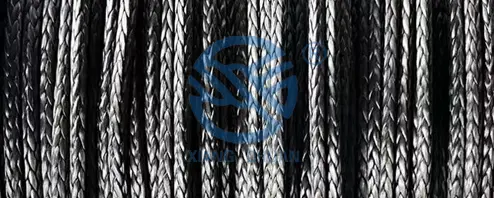
Effective storage of synthetic lifting products is a critical yet often overlooked aspect of operational safety and asset longevity. In the maritime, industrial, and logistics sectors, Endless Sling units made from polyester, nylon, or other man-made fibers are widely used for their flexibility, light weight, and resistance to cracking under dynamic loads. However, when these items are kept in humid warehouses, their mechanical performance and service life can be compromised if environmental controls and handling disciplines are not properly established. This article discusses professional, standards-aware methods to store endless sling products in high-moisture environments, helping procurement managers, safety officers, and maintenance teams reduce risk and support search-relevant, educational content for industrial websites.
Humidity is a measurable atmospheric condition that accelerates several degradation pathways in synthetic fiber structures. Polyester exhibits generally good resistance to water absorption, yet prolonged exposure to condensation can encourage surface staining, reduced friction between yarns, and gradual loss of dimensional stability. Nylon tends to absorb a small percentage of moisture, which may temporarily lower breaking strength while increasing elongation; though strength often recovers after drying, repeated wet-dry cycles can fatigue the polymer chains. In coastal or poorly ventilated warehouses, high relative humidity above sixty percent combined with temperature fluctuations creates dew point conditions on cooler floors and metal racks, leading to localized wetting of stored slings.
The first principle of correct storage is segregation from ground contact. Endless sling loops should never be deposited directly on concrete or soil, because capillary action draws moisture upward and abrasive particles embed into the jacket. Specialized racks with rounded edges, coated steel bars, or wooden pallets with air gaps are recommended. The storage area must be covered, roof-tight, and preferably insulated to avoid thermal bridging. Where the building envelope cannot be upgraded quickly, deployable curtain walls or local enclosure pods can isolate the sling inventory from ambient damp.
Ventilation strategy is equally important. Passive cross-ventilation through louvered vents can reduce stagnant air, but in tropical or monsoon climates mechanical dehumidification may be necessary. Desiccant rotor units or refrigerant dehumidifiers capable of holding the room below fifty percent relative humidity will substantially slow mold growth on textile surfaces. It should be noted that synthetic fibers themselves are not nutritious to fungi, but residual body oils, palm prints, or packaging adhesives left on the sling can support microbial films that mechanically weaken the cover. Therefore, clean handling prior to storage is mandatory.
Light exposure is another variable. Although indoor warehouses typically block UV radiation, certain skylight panels emit enough diffuse sunlight to photodegrade nylon over months. Endless sling products should be placed away from windows or covered with opaque polyethylene sheeting that does not trap water underneath. If transparent wraps are used, perimeter venting strips must be included to prevent a greenhouse effect that elevates humidity inside the bundle.
Inventory rotation supports both safety and cost control. A first-in-first-out system ensures older stock is inspected and put into service before newer lots, avoiding decade-long hibernation that escapes periodic examination. Each endless sling should carry a durable identification tag stating date of receipt, lot number, and rated capacity; this tag must remain legible under humid conditions, so laser-etched polymer plates outperform paper stickers. Monthly visual audits checking for stiffening, discoloration, or odor should be documented in a logbook, which also benefits website case-study content when anonymized.
Temperature stability deserves attention because humid warehouses often experience condensation when warm moist air meets cold morning surfaces. Infrared heaters or low-wattage circulating fans can maintain a two to three degree Celsius differential above dew point. Avoid steam-based heating in the same room, as it raises absolute moisture load. In freezer-adjacent facilities, a positive pressure vestibule stops moist air intrusion when doors open.
Packaging before long-term storage should use breathable textile bags rather than sealed plastic, unless vacuum with silica gel is applied. A common mistake is shrink-wrapping damp slings; the trapped moisture initiates hydrolysis in some polyamide variants. If export shipment requires plastic wrap, the sling must be fully dry and accompanied by humidity indicator cards inside the crate.
Training is the connective tissue of all technical measures. Warehouse staff must understand that an endless sling is not a general cargo item; dropping it into a puddle or stacking sharp steel on top induces hidden cuts that propagate under load. Toolbox talks illustrating cross-section damage and explaining how moisture interacts with fibers build a culture of care. Safety management systems such as ISO 45001 encourage such competency records, and aligning storage SOPs with international lifting standards demonstrates due diligence to auditors.
From a website optimization perspective, publishing detailed guidance on endless sling storage addresses real search queries from engineers and EHS specialists. The article naturally incorporates long-tail keywords like humid warehouse storage, synthetic sling maintenance, and fiber sling humidity limit without keyword stuffing. Internal links to product pages and news archives keep dwell time high, while original professional content earns backlinks from industry forums. Importantly, the text avoids brand names and unverified claims, focusing on physics and standard practice that remain valid across manufacturers.
Periodic re-certification of stored stock is advised where local regulation demands. Even unused endless sling lots age; polymers undergo slow oxidative change accelerated by heat and moisture. A conservative maximum shelving period of five years before formal inspection protects users. If the sling shows any hardness or powdered surface, it should be quarantined pending expert assessment.
In summary, storing endless sling in humid warehouses requires a layered approach: elevate and segregate, control humidity with ventilation or dehumidifiers, block light, stabilize temperature above dew point, use breathable packaging, tag and rotate stock, and train personnel. These steps preserve breaking strength, prevent microbial and mechanical damage, and extend service interval. For industrial operators, the savings from avoided premature disposal and incident downtime far exceed the cost of basic climate control. For website owners, such technically accurate and non-promotional articles strengthen topical authority in the lifting and rigging niche, ultimately benefiting both users and search rankings.

 Español
 Portugues
 Pусский
 Français
 Deutsch
 日本語
 한국어
 العربية
 Italian
 Nederlands
 Ελληνικά
 Svenska
 Polski
 ไทย
 Turkish
 हिन्दी
 Indonesia
 Melayu
 Tiếng Việt
 dansk
 Magyar
 বাংলা
 čeština
 Soomaali
 မြန်မာ
 فارسی
 українська
 norsk
 Gaeilge
 беларускі
 Română
 ພາສາລາວ
 Filipino
 lietuvių
 Cymraeg
 Suomalainen
 o'zbek
 اردو
 հայերեն
 سنڌي
 Hrvatski
 íslenskur
 galego
 català
 Zulu South Africa
 ಕನ್ನಡ
 Indonésia Sunda
 Кыргызча
 тоҷикӣ
 Србија
 Hawaii
 नेपाल
 euskara
 latvija
 پښتو
 საქართველოს
 bosna
 Eesti
 Azerbaijani
 Shqipëria
 Malta
 Kikongo
 Eʋegbe
 Fiji
 Tonga
 中文站

 +86-514-88253368



 Phone
Comment
(0)