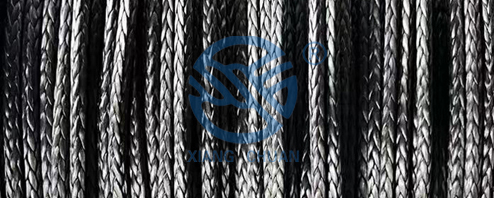
To the uninitiated, the docking of a large vessel appears to be a symphony of controlled chaos—the deep-throated growl of the engines, the shouted commands, the frantic activity of the deck crew. It is a high-stakes ballet where thousands of tons of steel, driven by wind and current, must be gently coaxed against a concrete pier. In this delicate operation, the most critical actors are not the massive hawsers or the steel bollards, but the deceptively simple components that connect them: the Mooring Tails. These specialized rope segments are the unsung heroes of modern maritime operations, and they are the primary reason why the final, critical phase of docking can be transformed from a nerve-wracking struggle into an almost effortless procedure. The secret to their efficacy lies in a masterful application of physics, materials science, and design, working in concert to absorb, dampen, and manage the immense forces at play.
The Adversaries of a Safe Berth: Understanding the Forces
Before appreciating the solution, one must understand the problem. A moored vessel is not a stationary car in a parking spot. It is a massive, floating object subjected to a constant assault of dynamic forces:
Surge: The fore-and-aft motion caused by waves, the wake of passing vessels, or the thrust of a ship's own propeller.
Sway: The side-to-side movement, often driven by crosswinds or lateral currents.
Heave, Pitch, and Roll: The vertical and rotational movements that further complicate the holding of a fixed position.
A traditional, all-steel wire rope or a stiff, heavy nylon hawser is immensely strong, but it is brutally unforgiving. It behaves like a solid bar. When a sudden force—a large wave, a strong gust of wind—jerks the vessel, this rigid connection transmits the energy instantly and directly. There is no "give." The result is a violent, snapping tension that stresses the ship's mooring fittings (bitts, fairleads), the shore-based bollards, and the ropes themselves to their absolute limits. This "shock loading" can generate peak forces many times higher than the steady-state load, creating a dangerous and noisy environment characterized by loud "cracks" and shudders. This is the opposite of effortless; it is a constant, tense battle.
The Physics of Effortlessness: Elasticity as an Energy Converter
Mooring tails introduce the crucial element of elasticity. They are engineered to act as sophisticated mechanical fuses and shock absorbers. The principle is akin to the suspension system in a car. Driving over a pothole with a solid metal axle would be a jarring, destructive experience. The springs and shock absorbers, however, compress and extend, smoothing out the impact and protecting the chassis.
Mooring tails perform an identical function for the vessel. Made primarily from high-performance synthetic fibers like Nylon, Polyester, or high-modulus materials like Dyneema® and HMPE, these tails are designed to stretch under load. This stretch is not a sign of weakness; it is their core functionality. When a sudden surge force pulls on the mooring line, the tail elongates. In doing so, it performs physical work, converting the kinetic energy of the moving vessel into potential energy stored within the stretched molecular bonds of the synthetic fibers.
This process fundamentally changes the dynamics of the event:
Peak Load Reduction: Instead of an instantaneous, sharp spike in tension, the force is applied over a longer period. The energy is absorbed and released gradually as the tail stretches and recovers. This "softening" of the load curve dramatically reduces the peak forces on the entire mooring system, often by 50% or more compared to a non-elastic connection.
Damping Oscillations: A moored vessel can develop a resonant rhythm, swaying or surging back and forth. An elastic mooring tail acts as a damper. As the vessel moves out, the tail stretches, absorbing energy. As it moves back, the tail's recovery doesn't return all the energy, effectively bleeding off the oscillatory motion and bringing the vessel to rest more quickly.
This is the first layer of "effortlessness." The crew no longer needs to constantly tend to groaning, shuddering lines. The system self-regulates, absorbing minor bumps and jolts automatically, allowing the vessel to sit calmly at the berth.
The Material Science: Engineering the Perfect Spring
Not all ropes are created equal, and the choice of material for a mooring tail is a precise science tailored to the application.
Nylon (Polyamide): The gold standard for shock absorption. Nylon has an exceptionally high elasticity, capable of stretching up to 30-40% of its length before breaking. This makes it unparalleled in its ability to absorb massive amounts of energy. It is the go-to material for primary mooring tails in environments with significant surge, such as exposed ports or tidal areas. Its effortless performance comes from its remarkable ability to "give" when needed.
Polyester: Offering less stretch than Nylon (typically 10-15%), polyester provides a firmer, more stable hold. It is an excellent compromise where some shock absorption is required, but minimal vessel movement is desired. It delivers a more "controlled" effortlessness, ideal for calmer berths or for securing larger vessels where even small movements are significant.
High-Modulus Fibers (Dyneema®, HMPE, Aramid): These fibers are incredibly strong for their weight and size and exhibit very low stretch (less than 3-4%). They are not used for their elasticity but for their strength and lightweight properties. They are often integrated into composite mooring systems or used as "leaders" connected to a more elastic tail. Their contribution to effortlessness is different: their light weight and flexibility make them incredibly easy for deck crews to handle, heave, and secure, reducing physical labor.
Modern mooring tails often use a combination of these materials or a "composite" construction—a low-stretch core for strength, sheathed in a more elastic and abrasion-resistant outer cover. This multi-material approach optimizes for both ultimate strength and controlled elasticity.
The Human Factor: Ergonomics and Safety
The effortlessness conferred by mooring tails extends beyond pure physics to the human element on the deck.
Ease of Handling: A traditional, heavy, and stiff steel wire hawser is incredibly difficult to handle. It requires powered winches, can kink dangerously, and poses a severe injury risk to crew members. In contrast, a synthetic mooring tail, even with a high breaking strength, is relatively lightweight and highly flexible. It can be manhandled into position, passed easily through fairleads, and doubled up on a bollard with minimal physical strain. This translates directly into a faster, safer, and less physically exhausting docking procedure.
Weight and Buoyancy: The lightweight nature of synthetic tails offers another subtle advantage. If a tail is accidentally dropped into the water, it floats. A steel hawser sinks immediately, risking becoming fouled in the vessel's propeller or being dragged along the seabed. A floating line is easily recovered, preventing a potentially disastrous and time-consuming incident.
"Make-Up" and Stowage: The flexibility of mooring tails allows them to be flaked down neatly into lockers or coiled compactly on reels, ready for the next use. This simplifies post-departure procedures and keeps the deck tidy and safe.
Advanced Designs: Taking Effortlessness to the Next Level
The evolution of the mooring tail continues. The latest innovations further automate and refine the process:
Integrated Load Monitoring: Some advanced mooring tails now incorporate optical fiber sensors within their core. These sensors can provide real-time data on the tension in every single line, displayed on a bridge monitor. This removes the guesswork for the officer in charge. They no longer need to rely on the sound and sight of the lines; they have a precise, digital readout, allowing for proactive adjustments and ensuring optimal, effortless security.
Tailored Elasticity Profiles: For critical applications, such as Floating Production Storage and Offloading (FPSO) vessels that remain on station for years, mooring tails are custom-engineered with specific load-elongation curves. They are designed not just to absorb daily wave action, but to withstand and survive extreme weather events like 100-year storms, holding the billion-dollar asset safely in place with a reliability that feels almost effortless.
Conclusion: The Silent Guarantor of Safe Haven
So, how do mooring tails make docking so effortless? They do so by acting as the intelligent, responsive interface between a restless, powerful vessel and a static, unyielding shore. They replace brute force with finesse, substituting jarring impacts for smooth, managed energy transfer. They are the shock absorbers that tame the violence of shock loading, the dampers that quiet the oscillations of the sea, and the ergonomic tools that safeguard the crew from physical peril.
The next time you see a massive container ship or a graceful cruise liner resting calmly alongside a pier, seemingly at peace with its environment, look closely at the lines securing it. You will likely see the elegant curve of synthetic mooring tails, doing their silent, relentless work. They are the embodiment of a profound engineering truth: that true strength is not found in rigid resistance, but in intelligent, controlled flexibility. They transform the complex, high-stakes drama of docking into a predictable, safe, and—yes—effortless procedure.

 Español
 Portugues
 Pусский
 Français
 Deutsch
 日本語
日本語
 한국어
한국어
 العربية
 Italian
 Nederlands
 Ελληνικά
 Svenska
 Polski
 ไทย
ไทย
 Turkish
 हिन्दी
 Indonesia
 Melayu
 Tiếng Việt
 dansk
dansk
 Magyar
 বাংলা
বাংলা
 čeština
 Soomaali
 မြန်မာ
 فارسی
فارسی
 українська
 norsk
norsk
 Gaeilge
 беларускі
 Română
 ພາສາລາວ
 Filipino
 lietuvių
 Cymraeg
 Suomalainen
 o'zbek
 اردو
اردو
 հայերեն
 سنڌي
سنڌي
 Hrvatski
 íslenskur
 galego
 català
 Zulu South Africa
 ಕನ್ನಡ
ಕನ್ನಡ
 Indonésia Sunda
 Кыргызча
 тоҷикӣ
 Србија
 Hawaii
 नेपाल
नेपाल
 euskara
 latvija
 پښتو
پښتو
 საქართველოს
 bosna
bosna
 Eesti
Eesti
 Azerbaijani
 Shqipëria
 Malta
Malta
 Kikongo
 Eʋegbe
 Fiji
Fiji
 Tonga
Tonga
 中文站
中文站

 +86-514-88253368



 Phone
Phone
Comment
(0)